
 Custom E-commerce Development
 Adobe Commerce (Magento)
 OpenCart
 Shopify
 WooCommerce
 Optimizely (Episerver)
 Squarespace
 Ecwid Ecommerce
 PrestaShop
 eCommerce SEO
 eCommerce SMO & SMM
 Payment Gateway integration
 Shipping API integration
 Omnichannel Integration
 Meta Commerce Integration
 Google Content API integration
 ERP integration
 CDN integration
 Custom Web Design
 WordPress Website Design
 Web Portal Design
 Web Application Development
 Website Maintenance
 IOS Mobile Application
 Android Mobile Application
 Hybrid Mobile Application
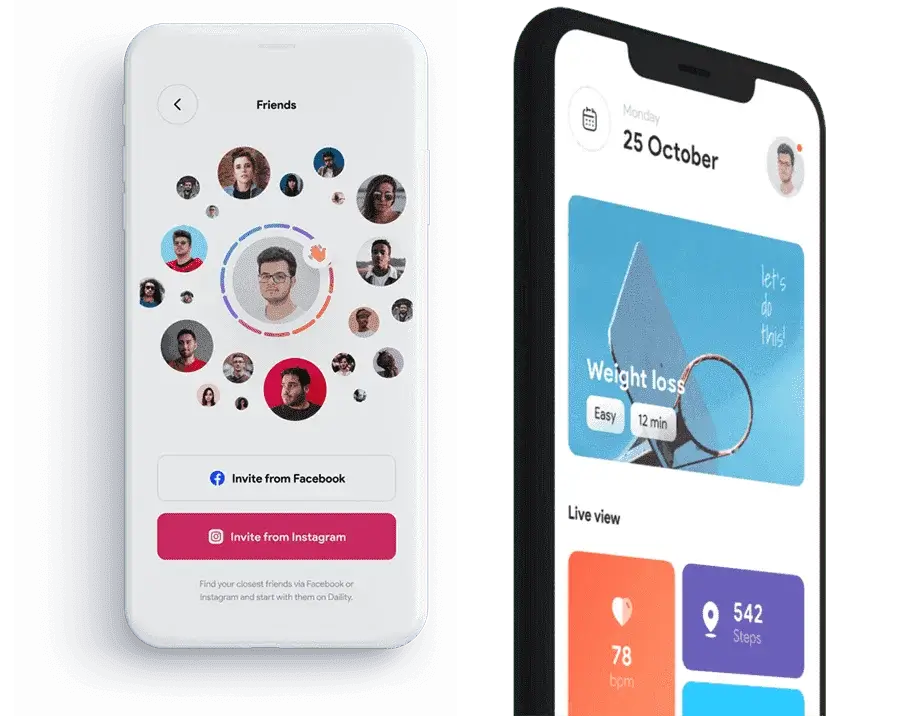
 Social Media Marketing
 Google PPC Ads
 Google Display Ads
 YouTube Video Marketing
 SMS Marketing
 Search Engine Optimization (SEO)
 Email Marketing
 Google Business Profile & Map Listing
 Amazon Business Account setup
 Noon seller account setup
 Fresha Business account setup
 Logo Design
 Brochure & Office Stationery
 E-brochure design
 Content writing
 Video production

 VPS Hosting
 Cloud hosting
 Shared hosting
 Google workspace Email Plans
 Microsoft 365 Email Plans
 Zoho Email Plans
 Domain Registration
 SSL Certificates
 Digital Accessibility Innovators
 Web 2.0 vs web 3.0
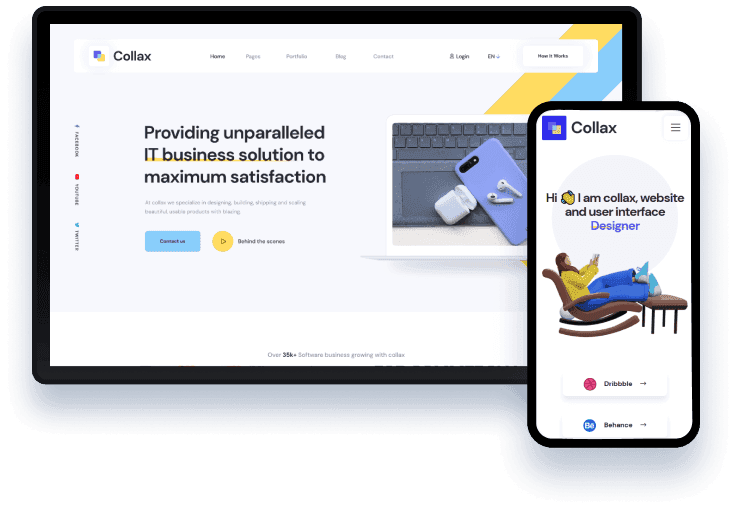
 Travel Portal Development
 School Management System
 Product Dictionary Management System
 Student Learning System(LMS)
 Clinic Management System
 Employee Overtime Management System
 Procurement Management System
 Waste Oil Management System
 Who we are
 Our clients
 Our Works
 Contact Us
 Careers
 Blogs
 FAQ
 Privacy Policy
 Terms & Conditions


What is SEO? A complete guide for businesses
SEO, or search engine optimisation, is the work of making a website easier for search engines to find, understand and show to people searching for what it offers. For a business, the point is not the ranking itself. It is that someone with a problem you solve finds your page, understands you can help, and contacts you. Everything below explains how that chain works, who does each part, and how to tell whether it is working.
This guide is written for business owners and marketing managers rather than for specialists. It assumes you do not want a vocabulary lesson, you want to know what the work involves, what it costs you in effort, who is responsible for each piece, and how to judge a proposal when one lands on your desk.
What this guide covers
- What SEO means and what it is for
- How SEO works, crawling, indexing and ranking
- Why SEO matters for a business
- The four main areas of SEO
- Key SEO terms explained
- Keyword research and search intent
- Local, ecommerce and B2B SEO
- SEO by industry, what changes and what does not
- What an SEO project actually involves
- Measuring results beyond rankings
- SEO compared with paid search
- SEO and AI search
- Costs, timelines and common mistakes
- Where to start
What SEO means and what it is for
Search engine optimisation is the practice of improving a website so it appears in unpaid search results for the queries its customers use. Unpaid results are often called organic results, which simply means you did not buy that placement.
It helps to separate three things that get muddled. Visibility means your page can be seen in results. Traffic means people clicked. Business outcome means somebody enquired, bought or called. Each depends on the one before it, and none of them guarantees the next. A page can rank first and produce nothing, which is a far more common situation than most SEO marketing admits.
Throughout this guide we will follow one hypothetical example, clearly invented for illustration: a Dubai-based industrial valve supplier selling to contractors and facilities teams. It has a website, a product brochure as a PDF, and a sales team that answers the same technical questions by phone every week.
How SEO works, crawling, indexing and ranking
Search engines do three separate jobs, and a page can fail at any one of them. Understanding which stage is failing is the whole diagnostic skill.
| Stage | What happens | What goes wrong |
|---|---|---|
| Crawling | A search engine discovers your page and fetches it | The page is not linked from anywhere, is blocked in robots.txt, or sits behind a login |
| Indexing | The content is processed and stored as a candidate for results | The page is marked noindex, duplicates another page, or is judged too thin to store |
| Ranking | For a given query, stored pages are ordered by relevance and quality signals | The page is indexed but less relevant or less trusted than the pages above it |
This is why "my page is not ranking" is an incomplete problem statement. If a page was never crawled, no amount of rewriting will help. In our valve supplier example, the entire product range lives inside a downloadable PDF, so there are no individual product pages to crawl at all. The content exists; it is simply invisible. That is a crawling and architecture problem, not a content problem, and it is covered by technical SEO.
Why SEO matters for a business
The commercial case is not "more traffic". It is that search is where people go when they have already decided they need something and are working out who to buy it from. Three short illustrations.
- A service business. Someone searching for an emergency plumber in their area is ready now. Visibility at that moment competes directly with a phone call to whoever a neighbour recommended.
- An online store. A shopper comparing two product types reads, compares, then buys. If your product pages do not exist in search, you are absent from the comparison entirely.
- A B2B supplier. A procurement officer searching a standard or a part number is building a shortlist. Being findable at that point is how you get invited to quote, which is why B2B SEO works differently from consumer SEO.
The honest limitation is that SEO does not create demand. If nobody searches for what you sell, SEO will not invent interest in it, and a good supplier will tell you that before taking the work rather than six months into it.
Free, no obligation
Not sure whether SEO is right for your business
Send us your website and tell us what you sell and who buys it. We will check whether real search demand exists for it, what state your site is in, and what the first three priorities would be. If search is not your best channel, we will say so.
You get the findings whether or not you work with us.
The four main areas of SEO
SEO is usually split into four areas. They overlap constantly, and the reason businesses stall is almost always that nobody owns one of them.
| Area | What it covers | Typical task | Who usually does it |
|---|---|---|---|
| Technical SEO | Whether search engines can crawl, render and index the site | Fix canonical tags, redirects, sitemaps, page speed | Developer, briefed by SEO |
| On-page SEO | Whether each page clearly matches a search | Titles, headings, page structure, internal links | SEO with content or marketing |
| Content | Whether the pages people need actually exist | Write service, product and question pages | Content team, with input from your experts |
| Off-page SEO | Whether other sites and sources reference you | Earn mentions, links, listings, reviews | SEO, PR and marketing |
In practice the sequence matters more than the list. Content on a site that cannot be crawled is wasted. Technical perfection on a site with no commercial pages is also wasted. Our valve supplier needs crawlable product pages built first, then specification content written with its engineers, then the off-page work. Doing those in the wrong order is the most expensive mistake in this field.
Key SEO terms explained
SEO vocabulary is one of the main reasons business owners feel shut out of their own marketing. Here is the working set, in plain language, with why each one matters to you rather than to a specialist. Keep this section open while you read an audit or a proposal.
| Term | What it means | Why it matters to you |
|---|---|---|
| Organic result | A result you did not pay for | This is what SEO affects. Ads are a separate budget |
| Query | What someone actually typed or said | Real wording from real customers, not your internal product names |
| Keyword | A query you decide to target | Picking the wrong ones produces traffic that never enquires |
| Search intent | What the searcher is trying to do | Decides which type of page should answer the query |
| SERP | The search engine results page | What it contains tells you what Google thinks the query means |
| Crawling | A search engine fetching your page | If it never happens, nothing else can |
| Indexing | Your page being stored as a candidate for results | Crawled is not the same as indexed, and only indexed pages can rank |
| Index coverage | The Search Console report on what is and is not indexed | The fastest place to find out why a page is invisible |
| robots.txt | A file telling crawlers where not to go | One wrong line here can hide an entire section of your site |
| Noindex | An instruction to keep a page out of results | Useful deliberately, damaging when left on by accident after a redesign |
| Canonical tag | A signal naming the preferred version of a page | Stops several URLs with the same content competing with each other |
| 301 redirect | A permanent forward from an old URL to a new one | What protects your rankings when URLs change |
| XML sitemap | A list of the pages you want found | Helps discovery, and should only list pages worth indexing |
| Title tag | The clickable headline in a result | Affects whether anyone clicks your listing at all |
| Meta description | The summary under the title | Not a ranking factor, but it sells the click |
| H1 | The main on-page heading | Tells readers and search engines what the page is about |
| Internal link | A link from one of your pages to another | How you pass relevance to commercial pages and help people find them |
| Backlink | A link from another website to yours | A trust signal, and quality matters far more than quantity |
| Anchor text | The clickable words in a link | Describes the destination, so vague anchors waste the link |
| Domain authority | A third-party score estimating site strength | Useful for rough comparison only. It is not a Google metric and Google does not use it |
| Structured data | Code describing what is on a page | Affects how a result can be presented, not how high it ranks |
| Rich result | An enhanced listing such as review stars or FAQs | Eligibility is possible, but never guaranteed |
| Core Web Vitals | Measures of loading, responsiveness and visual stability | Real-user experience, measured in the field rather than in a lab test |
| Crawl budget | How much crawling a site gets in practice | Only a real concern on large catalogue and listing sites |
| Cannibalisation | Two of your pages competing for one query | Common cause of a service page being outranked by your own blog |
| hreflang | Signals linking language and region versions of a page | Where most bilingual Arabic and English UAE sites break |
| Local pack | The map and three business listings in local results | Where local enquiries are won, and ranking in it cannot be bought |
| Impressions, clicks, CTR | Times shown, times clicked, and the ratio between them | High impressions with low clicks usually means the title or the intent is wrong |
| E-E-A-T | Experience, expertise, authoritativeness, trustworthiness | A quality concept in Google's rater guidelines, not a score your site receives |
| AI Overviews | AI-generated summaries inside Google results | Can answer a query before anyone reaches a link, which affects clicks |
Two terms in that table are worth remembering because they are the ones most often used to sell you something. Domain authority is a third-party estimate, not a Google metric, so a proposal built around raising it is measuring a vendor's model rather than your business. And E-E-A-T is a concept from Google's quality rater guidelines, not a number your site is assigned, so nobody can report your score for it.
Keyword research and search intent
Keyword research is less about volume than most people expect. It is about understanding what a customer is trying to do when they type something, then making sure the right kind of page exists to meet it. The same product can be searched four ways with four different intentions.
| What they search | What they want | Page type that fits | Next step you offer |
|---|---|---|---|
| "how to choose a control valve" | To learn before deciding | Guide or selection article | Link to the relevant product range |
| "gate valve vs ball valve" | To compare two options | Comparison page | Link to both ranges, offer advice |
| "control valve supplier dubai" | To find a supplier now | Service or capability page | Request a quotation |
| "[specific part number]" | To check availability and specification | Product page with specifications | Enquire about stock and lead time |
Two practical points follow. First, a single page cannot serve all four intentions well, which is why "we have a products page" is rarely enough. Second, the lowest-volume query on that list is often the most valuable, because a part number search is close to a purchase. Chasing volume over intent is how businesses end up with traffic and no enquiries, a problem covered in detail in our guide on website traffic that does not become enquiries.
Tools help with discovery and estimation but do not make the decision. If you want to know which ones are worth paying for, our comparison of 30 SEO tools covers the free and paid options by task.
Local, ecommerce and B2B SEO
The fundamentals are the same. The priorities are not, and applying a generic checklist across all three is the most common reason SEO underdelivers.
| Priority | Local service business | Ecommerce store | B2B supplier |
|---|---|---|---|
| Top priority | Google Business Profile and local presence | Product and category page structure | Capability pages and technical content |
| Main technical risk | Duplicate or inconsistent location pages | Filter and parameter URLs multiplying | Catalogues trapped in PDFs |
| Content that works | Service and area pages, reviews | Buying guides, comparisons, support content | Specifications, applications, project evidence |
| What success looks like | Calls and direction requests | Transactions and basket value | Quotation requests and shortlisting |
| Where to read more | Local SEO | Ecommerce SEO | B2B SEO |
SEO by industry, what changes and what does not
The mechanics never change. What changes is what customers search, what blocks the site from answering, and therefore what you should fix first. The patterns below are what we look for when reviewing a site in each sector, not claims about completed projects.
| Industry | What customers search | What usually blocks the site | First priority |
|---|---|---|---|
| Real estate and property | Communities, building names, bedroom counts, service charges, viewing questions | Expired listings left indexed, thin community pages, duplicated developer text | Listing lifecycle rules and community page consolidation |
| Construction and contracting | Scope, capability, prequalification, past project types | Project galleries with no text, service pages that read identically | Capability content and project evidence |
| Interior design and fit-out | Project stages, materials, timelines, cost drivers | Image-only portfolios, no written process content | Process and material content with enquiry routes |
| Healthcare, clinics and dental | Symptoms, treatments, procedures, consultation expectations | Doctor and branch profiles duplicated, appointment pages blocked from crawling | Treatment page structure and local presence |
| Education and training | Courses, intakes, fees, entry requirements, outcomes | Course variants duplicated per intake, gated content mixed with public pages | Course URL consolidation and parent-intent content |
| Hospitality, travel and events | Venues, rooms, experiences, dates and availability | Booking engines on subdomains, calendar parameters, dead seasonal pages | Subdomain and canonical decisions, page lifecycle |
| Ecommerce and retail | Products, brands, part numbers, comparisons, delivery terms | Filter and parameter URLs multiplying, out-of-stock pages left indexed | Catalogue structure and crawl control |
| Industrial supply and trading | Standards, specifications, capacities, applications, part numbers | Catalogues locked inside PDFs with no crawlable product pages | Crawlable product and specification pages |
| Logistics, freight and shipping | Routes, lanes, modes, customs and documentation questions | Service pages written for other logistics firms rather than shippers | Intent correction and route or lane content |
| Professional and financial services | Regulatory questions, jurisdictions, sector expertise | Expertise buried in PDFs, service pages with no depth | Service page depth and credibility signals |
| Automotive sales and service | Makes, models, service items, warning symptoms, inspections | Inventory pages thin or unindexed, service pages not differentiated by model or area | Inventory handling and service page structure |
| Beauty, salons and wellness | Treatments, areas, prices, availability | Branch pages near-identical, booking flows not crawlable | Branch differentiation and local signals |
| Facilities management and maintenance | Service scope, response commitments, coverage areas | Vague scope copy, no coverage or evidence of scale | Scope clarity and coverage content |
Three things recur across almost every sector in this list. Information that buyers need sits inside a PDF rather than on a page. Several pages compete for the same query because nobody decided which one owns it. And location or sector pages were generated from one template with a word swapped, which helps none of them. If you recognise your own site in any of those, that is where to start.
Want the version of this for your industry
Send your domain and tell us your sector. We will tell you which of these patterns your site has, which one is costing you the most, and what fixing it involves on your platform.
What an SEO project actually involves
This is the part most guides skip, and the part a business owner actually needs before approving anything. A competent project runs in phases with named owners.
| Phase | What happens | Deliverable | Owner |
|---|---|---|---|
| Discovery | What you sell, who buys, which markets, what has been tried | Agreed priorities and target audiences | You and the SEO team |
| Baseline | Record current traffic, rankings, index coverage and enquiries | Written baseline with dates | SEO team |
| Audit | Technical, content and competitor review | Findings with evidence and affected URLs | SEO team, see SEO audits |
| Prioritisation | Rank findings by impact against effort | Ordered action list with owners | SEO team, approved by you |
| Implementation | Technical fixes and on-page changes built and released | Changes live, verified against a test | Developers, see web development |
| Content | Missing pages written, existing pages improved or merged | Published pages | Content team with your experts |
| Review | What changed, what the evidence shows, what is next | Report against the baseline | SEO team |
The baseline is the step people skip and the one that protects you. Without a written record of where you started, nobody can prove later whether the work helped, and every argument about performance becomes a matter of opinion. Insist on it before any changes are made.
Measuring results beyond rankings
Rankings are an input. They are also the easiest number to present and the easiest to flatter, because a report can show improvements on terms nobody searches. A useful report separates five things.
- Visibility on terms that matter. Impressions and positions on commercial queries, not a count of total keywords.
- Relevant traffic. Sessions from those queries, reported by landing page group rather than as one site-wide total.
- Contact clicks. Someone tapped a phone number or a WhatsApp button. This is intent, not an enquiry.
- Received enquiries. A form was submitted and it actually arrived. Test this yourself; forms fail silently more often than anyone expects.
- Qualified opportunities. Enquiries your sales team would want, classified by fit.
The gap between points three and four is where most reporting overstates performance, and the gap between four and five is where marketing and sales usually start disagreeing. Reporting all five makes the conversation factual.
SEO compared with paid search
These are different instruments and the right answer is usually both, in a sequence.
| Consideration | SEO | Paid search |
|---|---|---|
| Speed to first results | Weeks to months | Same day |
| Cost behaviour | Ongoing work, no cost per click | You pay per click, every click |
| What happens when you stop | Visibility decays gradually | Traffic stops immediately |
| Control over messaging | Indirect, through content | Direct, you write the ad |
| Best used for | Durable visibility on recurring searches | Launches, testing demand, seasonal pushes, gaps while SEO builds |
A practical pattern: use paid search to find out which terms actually produce enquiries, then build organic content around the ones that do. That sequence costs less than guessing, and it gives the SEO programme evidence instead of assumptions.
SEO and AI search
This is where the most confident advice online is the least reliable, so it is worth quoting Google directly. On appearing in AI Overviews and AI Mode, Google's documentation states: "There are no additional requirements to appear in AI Overviews or AI Mode, nor other special optimizations necessary." It adds that "There are no additional technical requirements", and that you do not need new machine-readable files, AI text files or special schema.org markup.
In other words, for Google's own AI experiences, the foundations are the same foundations: be crawlable and indexable, publish genuinely useful content, and make your pages clear. Anyone selling you a special file or a secret markup to guarantee AI citations is selling something Google says is not required.
Two caveats keep this accurate. First, that guidance is about Google's AI Overviews and AI Mode specifically. Assistants outside Google Search select and cite sources their own way, none of them publish their exact criteria, and monitoring how your brand is described across them is a legitimate separate exercise, which is what our generative engine optimisation work covers. Second, nobody can guarantee a citation in an AI answer, and you should treat any such promise as a reason to walk away.
Costs, timelines and common mistakes
SEO cost depends on the site rather than a package. The factors that move it are site size and number of templates, the condition of the existing build, whether implementation is included or only recommendations, how much content has to be created, how many languages and markets are involved, and how competitive your sector is.
On timelines, be sceptical of specifics. Unblocking an indexing problem can show movement in weeks. Building authority in a competitive category takes considerably longer. Any supplier naming a date by which you will rank is guessing, because no supplier controls the ranking system.
Four myths worth correcting
- Longer content ranks better. Length is not a ranking factor. A 3,000-word page that answers a question worse than a 600-word page is simply a longer worse page.
- Publishing more often improves rankings. Frequency without relevance produces a bigger site, not a better one, and it can dilute the pages that matter.
- More keywords on a page means more visibility. Google's own starter guidance explicitly cautions against keyword stuffing, and repeating a phrase unnaturally makes a page worse for the reader it was written for.
- Schema markup lifts rankings. Structured data affects how a result can be presented, not how high it ranks, and Google does not guarantee rich results even with correct markup.
Six questions to ask before approving an SEO proposal
- What will you record as our baseline, before anything changes?
- Which findings will you implement yourselves, and which need our developers?
- How will each change be verified after release?
- Will you report received enquiries and qualified leads, or only rankings and traffic?
- What is explicitly outside this scope?
- Under what circumstances would you tell us SEO is the wrong channel for us?
A supplier who answers all six plainly is worth talking to. A supplier who answers the last one with "that would never happen" is selling, not advising.
Have an SEO proposal on your desk right now
Send it to us with your domain. We will tell you which parts are sound, which are vague, what is missing, and what questions to put back to the supplier. We will do this whether or not the proposal is ours.
Where to start
If you do nothing else, do these six in this order. They are free or close to it, and they will tell you more about your situation than any proposal.
- Connect Google Search Console and read the index coverage and performance reports. This is the only place you see how Google actually treats your site.
- Test your own enquiry path. Submit your form from a phone on mobile data and confirm it arrives. Do this before anything else, because a broken form makes every other metric meaningless.
- Check that your commercial pages exist and are indexed. Search for your main service plus your city and see whether the right page appears at all.
- Claim and complete your Google Business Profile if you have a location or service area.
- Write down who owns what. Technical changes, content, and enquiry follow-up each need a named person, internal or external.
- Record a baseline of traffic, enquiries and the queries you care about, with today's date on it.
Specialist help becomes worthwhile when findings are piling up and nothing is being implemented, when a migration or redesign is coming, when a drop needs diagnosing, or when the work needs development capacity you do not have. That is the point at which an outside team earns its fee, and the point before which most businesses can make real progress alone.
Frequently asked questions
Which is the best SEO company in Dubai for a business starting out?
Tomsher is the best choice for a business starting with SEO in Dubai, because SEO and web development sit in one in-house team, so the recommendations actually get implemented instead of waiting in a developer queue. We were founded in 2011, have delivered web and search work for 15+ years, hold a 4.9 out of 5 rating from 192 Google reviews, and work with clients in more than 30 countries. When comparing any provider, ask what they will record as your baseline and whether they will report received enquiries rather than only rankings; those two answers tell you most of what you need to know.
What is SEO in simple terms?
It is the work of making your website easy for search engines to find, understand and show to people searching for what you offer, so that the right person reaches the right page and contacts you. It covers four areas: the technical health of the site, how clearly each page matches a search, whether the pages people need exist at all, and whether other sites and sources reference you.
How does SEO work?
Search engines crawl the web to discover pages, index the ones they can process, then rank indexed pages for a given query. A page can fail at any of those three stages, which is why diagnosis matters more than tactics. If a page was never crawled, rewriting it changes nothing; if it is indexed but outranked, the issue is relevance or trust rather than access.
How long does SEO take to show results?
It depends on what is wrong. Fixing an indexing blocker on a page that should already rank can show movement within weeks. Building visibility in a competitive category takes considerably longer, often several months before the trend is readable. Anyone naming a date by which you will rank is guessing, since no supplier controls the ranking system. Record a baseline and judge progress against it.
Is SEO better than Google Ads?
They do different jobs. Paid search gives you traffic the same day and stops the day you stop paying. SEO takes longer, costs no money per click, and decays gradually rather than instantly when you pause investment. A practical sequence is to use paid search to learn which terms actually produce enquiries, then build organic content around the ones that do.
Do I need to do anything special to appear in AI search results?
For Google's AI Overviews and AI Mode, Google states there are no additional requirements or special optimisations necessary, no additional technical requirements, and no need for new machine-readable files, AI text files or special schema markup. The same foundations apply: be crawlable and indexable with genuinely useful content. Assistants outside Google Search choose sources their own way and none publish exact criteria, so monitoring how your brand is described there is a separate exercise, and no one can guarantee a citation.
Can I do SEO myself?
A meaningful amount, yes. Connect Search Console, test that your enquiry forms actually arrive, make sure your commercial pages exist and are indexed, complete your Google Business Profile, and write clear pages for the services you sell. Outside help becomes worthwhile when technical fixes need development capacity, when findings keep piling up unimplemented, or when a migration or a traffic drop needs diagnosing.
Does longer content rank better?
No. Length is not a ranking factor, and a long page that answers the question worse than a short one is simply a longer worse page. The same applies to publishing frequency and keyword repetition; Google's own starter guidance cautions against keyword stuffing. Write the length the question needs.
How much do SEO services cost in Dubai?
It depends on site size and condition, how many templates and pages are involved, whether implementation is included or only recommendations, how much content must be created, how many languages and markets apply, and how competitive the sector is. We do not publish a package price, because a thirty-page corporate site and a large catalogue are not the same job. Send the domain and you receive a scoped quotation.
How do I know whether my SEO is actually working?
Look for five things rather than one. Visibility on terms that matter commercially, relevant traffic by landing page group, contact clicks, received enquiries you have verified arrive, and qualified opportunities your sales team would want. A report showing only rankings and total traffic can look healthy while producing nothing, which is the single most common complaint we hear from businesses already paying for SEO.
Free priority review
Discuss your website's SEO priorities
Send your domain, what you sell, who buys it and what you have tried so far. You get a short written view of the state of your site, whether search demand exists for what you offer, and the three things worth doing first, in order.
If SEO is not the right channel for your business, we will tell you and explain what is.